As a supplier of upper ball joints, I often get asked the question: "Can an upper ball joint be repaired?" It’s a crucial query, especially for vehicle owners looking to save money and extend the lifespan of their cars, as well as for mechanics aiming to provide the best service options. In this blog, I’ll explore the possibilities of repairing upper ball joints, the factors influencing the decision, and the implications for both repair and replacement. Upper Ball Joint
Understanding the Upper Ball Joint
Before delving into the repair discussion, it’s essential to understand what an upper ball joint is and its role in a vehicle. The upper ball joint is a critical component of the suspension system. It acts as a pivot between the control arm and the steering knuckle, allowing for smooth movement and articulation of the wheels. This movement is vital for steering control, wheel alignment, and overall vehicle stability.
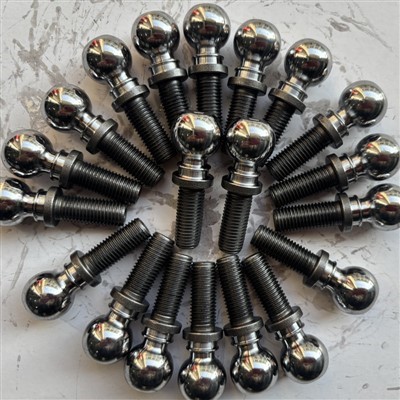
The ball joint consists of a ball stud and a socket, enclosed in a housing. Over time, due to regular wear and tear, exposure to harsh road conditions, and the forces exerted on it during vehicle operation, the ball joint can experience degradation. Symptoms of a worn – out ball joint include uneven tire wear, a clunking noise when going over bumps, steering instability, and a wandering sensation while driving.
The Feasibility of Repairing an Upper Ball Joint
The short answer to whether an upper ball joint can be repaired is yes, but it’s a qualified yes. Several factors come into play when determining if a repair is feasible.
Type of Damage
If the damage to the ball joint is minor, such as a small amount of wear on the ball stud surface or a slightly loose seal, there may be options for repair. In some cases, the joint can be disassembled, the worn parts can be cleaned, and if necessary, replaced with new seals or bushings. For example, if the seal has been compromised, allowing dirt and moisture to enter the joint, replacing the seal can prevent further damage and potentially extend the life of the joint.
However, if the ball stud is severely worn, cracked, or the socket has significant pitting, repair may not be a viable option. These types of damage can affect the structural integrity of the joint, and attempting to repair it may lead to a safety hazard. A cracked ball stud could break under stress, causing a sudden loss of steering control.
Age and Mileage of the Vehicle
The age and mileage of the vehicle also play a role in the decision – making process. In an older vehicle with high mileage, it may be more cost – effective to replace the entire ball joint rather than attempting a repair. This is because other components of the suspension system may also be nearing the end of their lifespan. Replacing the ball joint at the same time can save on future labor costs and reduce the risk of subsequent failures.
On the other hand, if the vehicle is relatively new and has low mileage, and the damage to the ball joint is indeed minor, a repair may be a reasonable choice. It allows the owner to maintain the original equipment and potentially avoid the cost of a full replacement.
Skill and Tools Required
Repairing an upper ball joint is not a simple task. It requires a certain level of mechanical skill and the right tools. Mechanics need to have experience in disassembling and reassembling ball joints, as well as knowledge of proper torque specifications. Specialized tools, such as ball joint presses, are often necessary to remove and install the ball joint components.
If a vehicle owner or mechanic does not have the necessary skills or tools, attempting a repair can lead to further damage and safety issues. In such cases, it may be better to seek professional help or opt for a replacement.
The Process of Repairing an Upper Ball Joint
When a repair is deemed feasible, the process generally involves the following steps:
Inspection
The first step is a thorough inspection of the ball joint. This includes checking for signs of wear, damage, and looseness. Mechanics may use a pry bar to check for play in the joint and a micrometer to measure the dimensions of the ball stud and socket.
Disassembly
Once the decision to repair is made, the ball joint needs to be disassembled. This typically involves removing the wheel, brake caliper, and rotor to gain access to the ball joint. The ball joint is then separated from the control arm and steering knuckle using a ball joint press or other appropriate tools.
Cleaning and Assessment of Parts
The disassembled parts are cleaned to remove dirt, grease, and debris. Each part is then carefully examined for damage. If the seal or bushing is worn, it can be replaced. If the ball stud has minor wear, it may be possible to refinish the surface.
Reassembly
After the necessary repairs and replacements have been made, the ball joint is reassembled. The new parts are installed, and the joint is tightened to the manufacturer’s specifications. It’s crucial to ensure that all components are properly aligned and torqued to prevent future problems.
Testing
Once the ball joint is reassembled and installed back into the vehicle, a test drive is conducted. This allows the mechanic to check for proper steering and suspension operation. Any abnormal noises or handling issues should be addressed immediately.
Advantages and Disadvantages of Repairing an Upper Ball Joint
Advantages
- Cost – Savings: Repairing a ball joint can be less expensive than replacing it, especially if only minor parts need to be replaced. This can be a significant factor for vehicle owners on a budget.
- Maintaining Original Equipment: For some vehicle owners, maintaining the original equipment is important. Repairing the ball joint allows them to keep the original component in their vehicle.
Disadvantages
- Limited Lifespan: A repaired ball joint may not last as long as a brand – new one. The underlying wear and tear on the other components of the joint may still affect its performance over time.
- Safety Risks: If the repair is not done correctly, there is a risk of the ball joint failing, which can lead to a serious accident. This is why it’s crucial to have the repair done by a qualified mechanic.
Replacement as an Alternative
In many cases, replacement is the recommended option for a worn – out upper ball joint. A new ball joint ensures optimal performance and safety. It comes with a warranty from the manufacturer, providing peace of mind to the vehicle owner. Additionally, modern ball joints are often designed with improved materials and technology, which can enhance their durability and performance.
Conclusion

So, can an upper ball joint be repaired? The answer depends on a variety of factors, including the type of damage, the age and mileage of the vehicle, and the availability of skills and tools. While minor damage may be repairable, more severe damage often calls for replacement.
Ball Joint As a supplier of upper ball joints, I understand the importance of providing high – quality products to meet the needs of vehicle owners and mechanics. Whether you’re considering a repair or replacement of an upper ball joint, I’m here to offer you reliable products and expert advice. If you’re interested in purchasing upper ball joints for repair or replacement projects, don’t hesitate to reach out to me for more information and to discuss your specific requirements.
References
- "Automotive Suspension and Steering Systems" by William H. Crouse and Donald L. Anglin.
- "Chilton’s Auto Repair Manual" for various vehicle models.
- Technical bulletins from leading ball joint manufacturers.
Taizhou Huazhe Auto Parts Co., Ltd.
As one of the most professional upper ball joint manufacturers and suppliers in China, we’re featured by quality products and low price. Please rest assured to buy bulk high-grade upper ball joint in stock here from our factory. For pricelist, contact us now.
Address: No. 2828, Binkang Avenue, Sanjia Street, Taizhou Bay New Area, Taizhou City, Zhejiang Province
E-mail: 19906762800@163.com
WebSite: https://www.huazheindustry.com/
