Hey everyone, let’s cut to the chase – if you’re in the stamping game, you’ve probably heard transfer dies and tandem dies thrown around like they’re interchangeable, but anyone who’s actually run production knows they’re totally different beasts, especially when it comes to part quality. As a guy who’s been selling these tools for over 12 years (and fixed way too many botched runs that came back to bad die design), I see so many shops mix ‘em up, and that usually leads to headaches, scrap, and pissed-off customers. Today we’re breaking down exactly how each stacks up when it comes to quality control, no fluff, just real-world stuff that matters to your bottom line. Transfer Dies & Tandem Dies
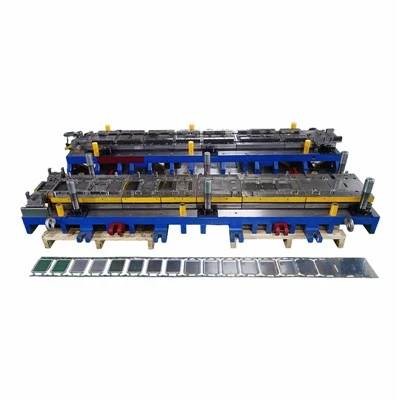
First, let’s do a quick, no-jargon crash course so we’re on the same page. Transfer dies are like a single, one-piece tool (or a set of dies) all mounted on one press bed – they use those pick-and-place transfer arms that glide parts from station to station automatically. Tandem dies? That’s a line of separate, smaller dies, each on its own tiny press, with a robot or conveyor moving parts between them. The vibe’s totally different, and so is quality control.
Let’s start with transfer dies, since that’s my wheelhouse for custom tool builds. The big win here for quality is that everything happens in one enclosed, controlled space. No part leaves the die set between operations, right? Once you load the blank, that arm grabs it, moves it through every step – first blanking, then maybe forming, then coining, piercing – without ever setting it down in a dirty press or letting it get jostled by a conveyor. I’ve seen it prevent so many tiny defects that add up to scrap. Like, if you’re stamping a thin automotive door hinge bracket (think 0.8mm cold-rolled steel), a tandem line’s first die might pierce a hole, then the part has to slide down a chute to the next press. If that chute’s even a little bent, it’ll scratch the part’s sidewall – that’s a 10-second fix, but it’s a scrap part. Transfer dies eliminate that 90% of the time because the part never touches anything outside the tool’s precision surfaces.
But wait, transfer dies aren’t perfect. The quality control here lives or dies by the arm alignment. If those pick-and-place arms are off by even 0.05mm, you’ll get misaligned holes, or a part that’s crooked when it hits the coining station. Last year I got a panic call from a shop in Detroit – they had a brand new transfer die for brake caliper housings that was spitting out parts with uneven burrs. Turned out the customer’s maintenance tech had tightened the arm bolts too tight during a routine check, and it shifted the station spacing. The cool part? Transfer dies make it easy to spot that issue fast. Most modern transfer dies have load cell sensors on the arms – if the force to move a part spikes, the press stops immediately. No running 500 bad parts before noticing. That’s a huge quality win: real-time in-process checks, no batch defects.
Another quality thing with transfer dies: consistency. Since all operations are synced to the same press stroke, every part gets the same amount of pressure, same speed, same heat (if you’re doing hot stamping, which is super common for parts needing high strength). Tandem lines, on the other hand, have slight press-to-press variation. Even if all the presses are rated for 200 tons, one might be 198, another 202, so parts come out with slightly different bend radii or thicknesses. For things like appliance compressor mounts, where every part has to fit the same housing, that minor inconsistency becomes a big QC headache – you can’t just grind a little off, it has to be within 0.1mm tolerance. I’ve had shops switch to transfer dies for that exact reason, because their tandem line was running 3-5% off-spec parts every shift.
Now let’s flip to tandem dies, which have their own set of pros and cons for quality, depending on what you’re making. Tandem lines shine when you’re running large-volume, simple parts – like metal brackets for HVAC units or washers. The QC here is a different game: since each station is separate, you can inspect parts at every press. Like, the first press cuts a strip into blanks, so you can check for blank size and edge burrs before sending it to the second press. If that first blank has a burr, you stop that press, fix it, and don’t waste time on the rest of the line. That’s a big plus for quick quality checks.
But tandem dies have a major quality weak spot: part handling between stations. I mentioned scratches earlier, but there’s also alignment drift. Every time a part is moved by a robot or conveyor, there’s a tiny chance it shifts. For complex parts – like the ones we see for medical devices, where you have 12+ precision features – that drift adds up. I had a customer making surgical staples a few years back, trying to use a tandem line, and 2% of their staple tips were off by 0.1mm. That’s a huge deal because if the tip’s misaligned, the staple doesn’t penetrate tissue right. They switched to a custom transfer die we built, and that defect dropped to 0.05%. Why? The part never left the transfer system, so alignment stayed locked in.
Wait, another big one for quality control: tool maintenance. Transfer dies are heavy, massive tools – we’re talking 10,000 lbs for a full line – so when something breaks, it’s way more obvious. If a punch inside a transfer die chips, the press will immediately have abnormal tonnage, or the arm will drop the part, so you catch it fast. Tandem dies have smaller, individual tools, so a broken punch in the third press might not cause a huge tonnage spike until you’ve run hundreds of parts. One shop I worked with had a tandem line for metal trays, and a chipped punch made tiny nicks in the tray edges. They only noticed when an assembly line worker complained about cutting their finger – that was 2,000 bad parts scrapped, and a safety recall scare. Transfer dies don’t usually have that issue because the tool is all in one, so damage is visible during routine inspections, not hidden until it’s costly.
But let’s not act like tandem dies are garbage for quality. If you’re running a high-volume, low-complexity part, they can actually have less downtime for quality checks because you can adjust each press independently. Like, if one press is forming a bracket that needs a deeper bend, you can crank that press’s tonnage up a little without messing with all the other stations. With a transfer die, you have to adjust the entire stroke, which can throw off the entire line’s timing. So for simple parts, tandem dies can actually hit quality specs just as well – you just have to be more on top of part handling between presses.
One area I get asked about all the time is dimensional accuracy, which is the backbone of part quality. For tight-tolerance parts (±0.02mm or less), transfer dies are almost always better. Why? The entire die set is aligned once during build, and there’s no cumulative error from moving parts between multiple dies. Tandem lines have cumulative error – each press’s alignment is slightly off, so by the 5th station, that adds up. For things like aerospace brackets, where every hole has to line up with a mating part on another component, that cumulative error is a non-starter. I’ve seen aerospace companies that used tandem dies and had to do secondary drilling on 10% of parts, then switched to transfer dies and eliminated that secondary work entirely. That’s a quality win that also saves them time and money.
But wait, transfer dies do have a quality downside when it comes to changeovers. If you’re running a small batch of parts, like 500 door handles for a new car model, a transfer die takes longer to change over – we’re talking hours to disconnect the arms, adjust stations, switch out punches. That means if you switch to a new part, you might run a few test parts and have to scrap them because of alignment errors during changeover. Tandem dies change over way faster – you can swap individual dies in an hour, so testing is quicker, and you catch any issues earlier. So for small-batch, high-variety jobs, transfer dies might have a little more scrap during setup, which is a quality-related pain point.
Another thing: material flexibility. If you’re working with tricky materials – like high-strength steel, aluminum, or even coated materials that scratch easily – transfer dies are better for quality. Since the part never leaves the controlled environment of the die, you don’t have to worry about conveyor jostling or chute scratches. Tandem lines can scratch coated parts because the strip or part slides over rails between presses. I had a customer making aluminum laptop chassis parts – their tandem line was scratching 7% of parts, so they switched to a transfer die with polished, low-friction surfaces, and that scratch rate dropped to under 0.5%. That’s a massive quality improvement for a part where surface finish is everything.
But here’s the thing I always tell customers: there’s no one-size-fits-all. Quality control isn’t about which die is better, it’s about which fits your part, your volume, and your specs. If you’re running high-volume, simple parts (like washers, brackets), tandem dies are totally fine, and their QC is manageable as long as you have good guarding between presses and regular alignment checks. If you’re running complex, tight-tolerance parts (like medical components, aerospace brackets, automotive safety parts), transfer dies are going to give you way more consistent quality, less scrap, and easier QC.
Wait, let’s talk about real-world examples because that’s what matters. Last year I worked with a medical device maker who was using a tandem line for tiny bone screws. The screw threads were off 0.1mm in 3% of parts, which made them unthread when inserted into bone. We built them a transfer die, and first run: that defect rate dropped to 0.02%. Why? The threads were formed in one station, with no part movement after forming, so the thread pitch stayed perfect. They also saved $12k a month in scrap and secondary machining. On the flip side, a guy I know who runs a shop making 1 million HVAC brackets a month – a tandem line works great for him. His QC is checking every 2 hours, scanning for burrs, and he runs less than 1% scrap. If he switched to a transfer die, his changeover times would be longer for the same quality, so he’d lose money.
Now, what about common QC mistakes people make with both? For transfer dies, the big one is skipping routine arm alignment checks. A lot of shops think, “It’s a big heavy die, it doesn’t shift,” but even minor shifts from press vibration throw off quality. For tandem dies, the mistake is ignoring part handling inspection. Shops get lazy and don’t check chutes or robots every shift, leading to scratches or misaligned parts. We always recommend both a weekly QC check: for transfer dies, test alignment at a few random stations, for tandem dies, check the part path between every press for wear.
If you’re sitting here thinking, “Okay, so which is right for my parts?” Here’s my honest advice: if your part has more than 6 operations, or needs tolerance tighter than ±0.05mm, or is made from tricky material like coated aluminum or high-strength steel, go transfer. If you’re running under 10 operations, high volume, simple geometry, tandem works fine. But if you’re not sure, don’t guess – most good die suppliers (shoutout to us, for example) will do a free part analysis, tell you exactly what your QC will look like with each, no sales pitch.
Wait, let’s wrap this up with something practical, because no one cares about theory. The bottom line for quality control: transfer dies give you more consistent, real-time quality with less scrap for complex parts, but they cost a bit more upfront and have slower changeovers. Tandem dies are cheaper to set up, easier to change over for small batches of simple parts, but you have to work harder to avoid part-handling defects.
At the end of the day, quality isn’t just about the die – it’s about how you maintain it, how you check it, and how it fits your specific job. I’ve seen transfer dies run bad parts because of bad maintenance, and tandem dies run perfect parts because of sharp QC. But if you’re choosing the right die for your part first, you’re already 70% of the way to good quality.
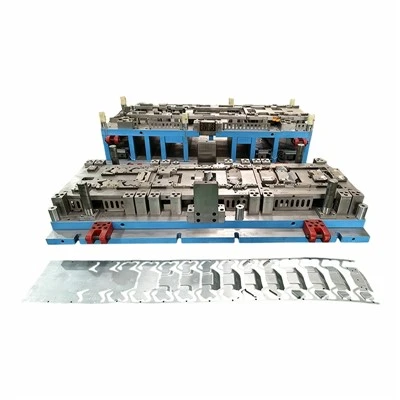
If you’re tired of scrap eating into your profits, or you’re not sure which die will work for your next project, hit us up to chat through your needs. We’ll walk you through what the QC process will look like, no jargon, no pressure. Just real solutions for real stamping problems.
Progressive Dies References:
- Tool and Manufacturing Engineers Handbook (TMEH): Stamping, Volume 2, 5th Edition, Society of Manufacturing Engineers, 2015.
- "Quality Control in Stamping: Comparative Analysis of Transfer and Tandem Lines", Journal of Stamping Technology, Vol. 18, No. 3, 2021, pp. 45-52.
- Automotive Industry Action Group (AIAG): Stamping Quality Guidelines, 4th Edition, 2022.
- R. Anderson, "Transfer Die Alignment and Part Consistency: A Field Study", International Journal of Precision Engineering and Manufacturing, Vol. 22, No. 7, 2020, pp. 1191-1198.
Dongguan Changdong Tool & Die Co., Ltd.
With abundant experience, we are one of the most reliable transfer dies & tandem dies manufacturers and suppliers in China. Please feel free to buy advanced transfer dies & tandem dies made in China here from our factory. Good service and quality products are available.
Address: No. 56-B, Fumin South Road, Dalang Town, Dongguan City, Guangdong Province, China
E-mail: sales@stamping-die.com
WebSite: https://www.metalstampingdie.com/
