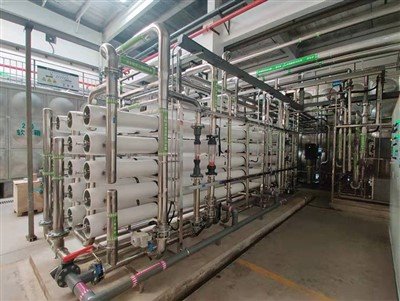
EDI (Electrodeionization) pure water systems are at the forefront of advanced water purification technology, offering a reliable and efficient method to produce high – purity water. As a supplier of EDI pure water systems, I’ve witnessed firsthand how various factors can impact their performance. One such critical factor is the pH of the feed water, which can significantly affect the operation, efficiency, and longevity of an EDI system. EDI Pure Water System
Understanding the Basics of EDI Pure Water Systems
Before delving into the effects of pH on EDI systems, it’s essential to understand how these systems work. EDI is a continuous, chemical – free water treatment process that combines the principles of ion exchange and electrodialysis. In an EDI module, feed water flows through a series of compartments separated by ion – exchange membranes. An electric current is applied across the module, which drives the ions in the water through the membranes and into adjacent compartments, where they are removed from the system. This process effectively removes dissolved salts, ions, and other impurities, producing high – purity water.
The Role of pH in EDI Systems
The pH of the feed water is a measure of its acidity or alkalinity, expressed on a scale from 0 to 14. A pH of 7 is considered neutral, values below 7 are acidic, and values above 7 are alkaline. In an EDI system, the pH of the feed water can influence several key aspects of its operation.
Ion Mobility
Ions are the charged particles that EDI systems are designed to remove from water. The mobility of these ions is affected by the pH of the water. In general, the mobility of ions increases with increasing pH up to a certain point. For example, at low pH values, hydrogen ions (H⁺) are abundant in the water. These hydrogen ions can compete with other cations (positively charged ions) for sites on the ion – exchange resins within the EDI module. As a result, the removal efficiency of other cations may be reduced. On the other hand, when the pH is too high, hydroxide ions (OH⁻) can become dominant, and they can also interfere with the ion – exchange process. Therefore, maintaining an optimal pH range is crucial for maximizing ion mobility and ensuring efficient ion removal.
Membrane Performance
The ion – exchange membranes used in EDI systems are sensitive to the pH of the surrounding environment. Extreme pH values can cause damage to the membranes, leading to reduced performance and a shorter lifespan. Acidic conditions can cause the membranes to swell, which can increase their resistance to ion flow and reduce the efficiency of the system. Alkaline conditions, on the other hand, can cause the membranes to become brittle and more prone to cracking. Additionally, high or low pH values can cause the formation of scale or deposits on the membranes, which can further impede ion transport.
Resin Regeneration
EDI systems use ion – exchange resins to enhance the removal of ions from the water. These resins need to be regenerated continuously to maintain their effectiveness. The pH of the feed water can affect the regeneration process. In an EDI system, the electric current is used to regenerate the resins by driving the ions off the resin beads and into the adjacent compartments. However, if the pH is not within the optimal range, the regeneration process may be less efficient. For example, at low pH values, the hydrogen ions can bind strongly to the resin beads, making it more difficult to remove other cations. At high pH values, the hydroxide ions can react with the resin, causing it to degrade over time.
Optimal pH Range for EDI Systems
The optimal pH range for most EDI systems is typically between 6 and 9. Within this range, the ion – exchange process functions efficiently, and the membranes and resins are less likely to be damaged. However, the exact optimal pH range can vary depending on the specific design and operating conditions of the EDI system.
When the feed water pH is within the optimal range, the ions in the water can move freely through the ion – exchange membranes and resins, allowing for efficient removal of impurities. The membranes are also less likely to experience swelling, brittleness, or scaling, which helps to maintain their performance over time. Additionally, the resin regeneration process is more effective, ensuring that the ion – exchange resins can continue to remove ions from the water.
Effects of Deviating from the Optimal pH
Low pH (Acidic Conditions)
If the feed water pH is below the optimal range (less than 6), several problems can occur. As mentioned earlier, hydrogen ions can compete with other cations for sites on the ion – exchange resins, reducing the removal efficiency of other cations such as sodium, calcium, and magnesium. This can result in higher levels of these ions in the product water, which may not meet the required purity standards.
Acidic conditions can also cause damage to the ion – exchange membranes. The membranes may swell, increasing their electrical resistance and reducing the overall efficiency of the EDI system. Over time, the acidic environment can also degrade the membranes, leading to leaks and a shorter lifespan.
High pH (Alkaline Conditions)
When the feed water pH is above the optimal range (greater than 9), hydroxide ions can become dominant. These hydroxide ions can react with calcium and magnesium ions in the water to form scale deposits on the membranes and other components of the EDI system. Scale formation can reduce the flow of water through the system, increase the pressure drop, and decrease the efficiency of ion removal.
In addition, high pH values can cause the ion – exchange resins to degrade. The hydroxide ions can react with the functional groups on the resin beads, altering their chemical structure and reducing their ability to exchange ions. This can lead to a decrease in the performance of the EDI system and the need for more frequent resin replacement.
Monitoring and Adjusting pH
As a supplier of EDI pure water systems, we emphasize the importance of monitoring the pH of the feed water regularly. This can be done using a pH meter, which is a simple and cost – effective tool. By monitoring the pH, operators can detect any changes in the feed water quality and take appropriate action before it affects the performance of the EDI system.
If the pH of the feed water is outside the optimal range, it can be adjusted using pH control chemicals. For example, if the water is too acidic, a base such as sodium hydroxide can be added to increase the pH. If the water is too alkaline, an acid such as hydrochloric acid can be used to lower the pH. However, it’s important to use these chemicals carefully and in accordance with the manufacturer’s instructions to avoid over – adjustment and potential damage to the EDI system.
Why Choosing Our EDI Pure Water Systems?
Our EDI pure water systems are designed with the latest technology to ensure reliable and efficient operation. We understand the critical role of pH in the performance of EDI systems, and our systems are engineered to handle a wide range of pH conditions within the optimal range. Our experienced team can provide comprehensive support, including on – site pH monitoring, system optimization, and troubleshooting.

Whether you’re in the pharmaceutical, power generation, or semiconductor industry, our EDI pure water systems can meet your high – purity water needs. We offer customized solutions tailored to your specific requirements, ensuring that you get the most out of your EDI system.
Deionized Water System If you’re interested in learning more about our EDI pure water systems or have questions about how pH affects the operation of these systems, we encourage you to reach out to us. Our sales team is ready to assist you with procurement and answer any questions you may have. Start a conversation with us today to explore how our EDI pure water systems can benefit your operations.
References
- "Water Quality and Treatment: A Handbook of Community Water Supplies," American Water Works Association.
- "Electrodeionization Technology: Principles, Design, and Applications," by Menachem Elimelech and William A. Phillip.
Shenzhen Jkon Environmental Protection Technology Co., Ltd.
As one of the most professional edi pure water system manufacturers and suppliers in China, we’re featured by quality products and good service. Please rest assured to buy customized edi pure water system made in China here from our factory. Contact us for more details.
Address: Shanghenglang Industrial park, Daloang Street, Longhua District, Shenzhen, China
E-mail: sales@jkontech.com
WebSite: https://www.jkontech.com/
